 saralog
The first time I laid eyes on a Native Pepperberry Rubbed Ribeye, I was standing in my grandmother’s kitchen, the warmth of her home enveloping me like a cozy blanket. It wasn’t just a cut of meat; it was a story waiting to unfold. I remember the perfume of freshly cracked pepper and the earthy notes that filled the room as Grandma expertly rubbed the ribeye with a blend of native spices. That was one of those magical moments, you know? The kind that makes your heart flutter and your taste buds dance with anticipation. I was captivated, not just by the rich aroma wafting through the air, but by the simple act of creation that had always brought my family together.
As we gathered around the table, the sizzling meat stole the show. Each bite of that thick, juicy ribeye, perfectly seasoned with the unique pepperberry, brought smiles and laughter, sharing stories that wrapped around us like the tender beef itself. That night, as I savored each delicious morsel, I knew I wanted to carry on this cherished tradition. I wanted to create that same sense of warmth and love in my home with this Native Pepperberry Rubbed Ribeye, inviting family and friends to join me in sharing not merely a meal but a deeply rooted experience of happiness and togetherness.
Flavor and Popularity
The Unique Flavor Profile of Native Pepperberry Rubbed Ribeye
Native to Australia, the pepperberry is a powerhouse of flavor that offers a delightful twist to your typical seasoning. Unlike regular black pepper, it carries an intriguing sweetness balanced with an earthy warmth that coats the juicy ribeye perfectly. When you apply the pepperberry rub to the ribeye, it’s not just a flavor addition; it brings a colorful complexity to the dish, inviting a myriad of sensory experiences with every bite. Imagine a smoky sear combined with the rich umami of the beef, the addition of aromatic herbs, and the unexpected slight sweetness. It’s a symphony of flavors in your mouth, each note dancing beautifully together.
Why This Recipe Is a Family Favorite and Crowd-Pleaser
One thing I treasure most about my Native Pepperberry Rubbed Ribeye is how it effortlessly wins over anyone who tries it. This is not just a recipe; it’s a sensation that stays with you long after the plates are cleared. Whenever I serve it, family members light up with nostalgia, as though they’ve returned to Grandma’s table. The bold flavors quickly make it a centerpiece for any gathering—be it holidays, birthdays, or just a casual Friday night feast. You’ll find people coming back for seconds, and you’ll catch them stealing bites when they think no one is watching.
Ingredients and Preparation
Essential Ingredients and Possible Substitutions
To create the star of the show, you will need the following essential ingredients for your Native Pepperberry Rubbed Ribeye:
- Ribeye Steak: Choose a well-marbled cut to ensure a juicy and tender outcome.
- Native Pepperberry: This is the jewel of the recipe, providing the unique flavor. If you can’t find it, try using freshly cracked black pepper with a hint of sweetness from a pinch of brown sugar as a substitute.
- Olive Oil: Helps with the sear and improves the overall richness of the dish.
- Garlic: Fresh minced garlic brings warmth and an aromatic depth that beautifully complements the meat’s flavor.
- Salt: A good coarse salt enhances the natural flavors of the ribeye.
- Fresh Herbs: Thyme and rosemary are my go-to herbs. Adding fresh leaves can elevate your dish, giving it that extra love from the garden.
If you need substitutions, don’t fret! If ribeye isn’t available, you can opt for a chuck eye steak or even a strip steak. Olive oil can be swapped for melted butter, adding a decadent richness to your cooking.
Step-by-Step Recipe Instructions with Tips
-
Prepare the Rub: In a small bowl, combine the crushed native pepperberry, minced garlic, salt, and olive oil to form a paste. You want a good coating consistency—not too runny but not overly thick.
-
Season the Steak: Generously apply the rub all over the ribeye, pressing gently to lock in those delicious flavors. I like to let the meat sit at room temperature for about 30 minutes before cooking—it brings the steak to a perfect sear.
-
Heat the Pan: Preheat a cast-iron skillet over high heat. You want it hot enough to get a good sear. A well-heated pan helps develop those beautiful caramelized edges.
-
Cook the Ribeye: Place the seasoned steak in the hot skillet. Do not overcrowd the pan; the goal is to seal in the juices. Cook for about 4-5 minutes on each side for a medium-rare steak, depending on thickness. Don’t forget to baste the steak with any rendered fat for extra flavor!
-
Check for Doneness: Use a meat thermometer to check internal temperatures—130°F for rare, 140°F for medium-rare, and 160°F for medium. Adjust your cooking time accordingly.
-
Rest the Steak: Once cooked to your liking, remove the ribeye from the pan and let it rest for at least 10 minutes. This allows the juices to redistribute, making for a tender bite.
-
Slice and Serve: Slice against the grain and serve it up! I love pairing it with garlic mushrooms or some sautéed asparagus, adding a beautiful splash of color and flavor to your meal.
Cooking Techniques and Tips
How to Cook Native Pepperberry Rubbed Ribeye Perfectly
Cooking the perfect ribeye doesn’t have to be intimidating. Here are my tips for achieving that tender, juicy steak we’ve all dreamed of:
-
Sear vs. Steam: Always make sure your pan is hot enough before adding the steak. If your meat is crowded or the pan isn’t hot, you’ll end up steaming rather than searing.
-
Temperature Control: If you have a lower heat setting, finish the cooking in an oven preheated to 375°F once the sear is complete. This ensures even cooking throughout.
-
Don’t Poke: Avoid using a fork to flip the steak—opt for tongs. Piercing the meat causes juices to escape, leading to a dryer steak.
Common Mistakes to Avoid
Even the most seasoned cooks can fall into simple traps. Here are a few common mistakes to sidestep when making your Native Pepperberry Rubbed Ribeye:
-
Skipping the Resting Phase: This step is crucial. Cutting into the steak right away lets all the delicious juices run out, making it dry and less flavorful.
-
Over-seasoning: The native pepperberry has a strong flavor on its own. Don’t overwhelm it with additional spices that overshadow its profile.
-
Serving Immediately: Letting the flavors sit for a moment can elevate your dish. Running hot off the grill is nice, but a little patience goes a long way.
Health Benefits and Serving Suggestions
Nutritional Value of Native Pepperberry Rubbed Ribeye
Ribeye is not just about sumptuous taste but also packed with various nutrients. High in protein and iron, this cut offers valuable health benefits, fueling your body and keeping you satisfied. The addition of fresh garlic and herbs enriches the dish with antioxidants and essential vitamins, making this recipe a hearty choice without sacrificing flavor.
Best Ways to Serve and Pair This Dish
You can serve your Native Pepperberry Rubbed Ribeye in many delightful ways. Here are some recommendations to elevate your meal:
-
With Sides: Pair it with buttery garlic mashed potatoes or roasted seasonal vegetables for a complete meal. I often throw in some roasted Brussels sprouts with a drizzle of balsamic glaze—so delicious!
-
With Wine: A bold red wine like a Cabernet Sauvignon complements the deep flavors of the ribeye beautifully. It enhances the richness of the beef and balances the pepperberry’s kick.
FAQ Section
What type of mushrooms are best for Native Pepperberry Rubbed Ribeye?
When it comes to mushrooms, I adore using cremini or shiitake. Both have a lovely umami flavor that pairs beautifully with the robust ribeye. If you’re feeling adventurous, try portobello for a meaty texture that can stand up to the steak.
Can I use dried garlic instead of fresh?
While fresh garlic provides a lovely aromatic flavor, you can certainly use dried garlic if fresh isn’t available. Substitute about one teaspoon of garlic powder for every clove.
How do I store leftover Native Pepperberry Rubbed Ribeye?
Let the meat cool to room temperature, then wrap it tightly in plastic wrap or place it in an airtight container. It should keep in the fridge for up to three days.
Can I freeze Native Pepperberry Rubbed Ribeye?
Absolutely! If you want to save some for later, wrap the ribeye tightly and store it in the freezer for up to three months. Just remember to thaw it in the fridge overnight when you’re ready to enjoy it again.
Conclusion
If you’re like me, every meal has a story woven with memories, laughter, and love. The Native Pepperberry Rubbed Ribeye isn’t just something to eat; it’s a chance to create your own cherished moments around the table. When you serve it, you’re not just feeding people—you’re inviting them to partake in a tradition filled with joy and warmth. So, gather your loved ones, fire up the skillet, and trust me, you’ll want to make this again and again.
Print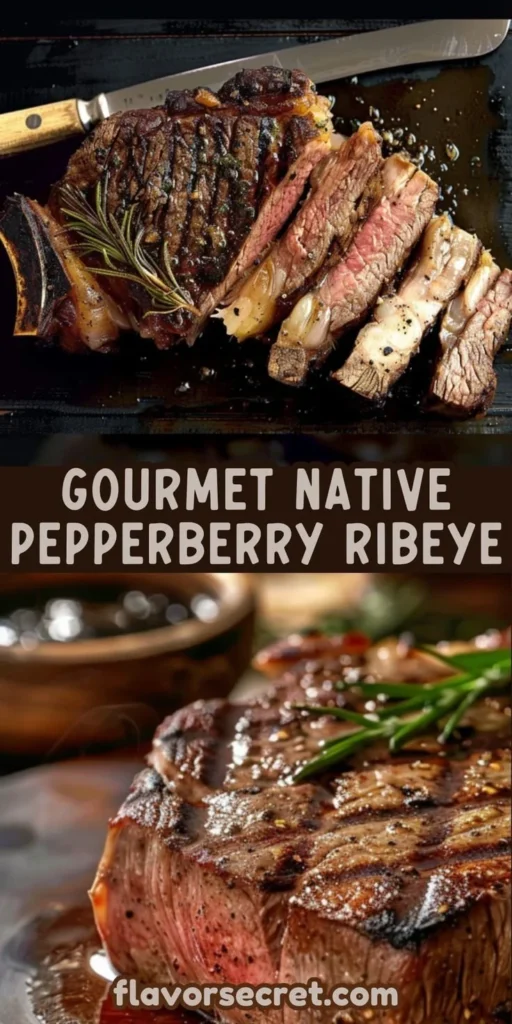
Native Pepperberry Rubbed Ribeye
A flavorful ribeye steak rubbed with native pepperberry and herbs, creating a juicy centerpiece for family gatherings.
- Total Time: 25 minutes
- Yield: 2 servings
Ingredients
- 1 Ribeye Steak
- 2 tbsp Native Pepperberry (or freshly cracked black pepper with a pinch of brown sugar)
- 2 tbsp Olive Oil
- 3 cloves Garlic, minced
- 1 tsp Coarse Salt
- Fresh Herbs (Thyme and Rosemary)
Instructions
- Prepare the Rub: In a small bowl, combine the crushed native pepperberry, minced garlic, salt, and olive oil to form a paste.
- Season the Steak: Generously apply the rub all over the ribeye, pressing gently to lock in flavors. Let sit at room temperature for 30 minutes.
- Heat the Pan: Preheat a cast-iron skillet over high heat.
- Cook the Ribeye: Place the seasoned steak in the hot skillet and cook for about 4-5 minutes on each side for medium-rare.
- Check for Doneness: Use a meat thermometer to check internal temperatures (130°F for rare, 140°F for medium-rare).
- Rest the Steak: Remove from the pan and let it rest for at least 10 minutes.
- Slice and Serve: Slice against the grain and serve with garlic mushrooms or sautéed asparagus.
Notes
For perfect results, ensure pan is hot to sear properly. Avoid piercing the meat while cooking.
- Prep Time: 15 minutes
- Cook Time: 10 minutes
- Category: Main Course
- Method: Pan-Seared
- Cuisine: Australian
- Diet: Gluten-Free


 carla
carla
 saralog